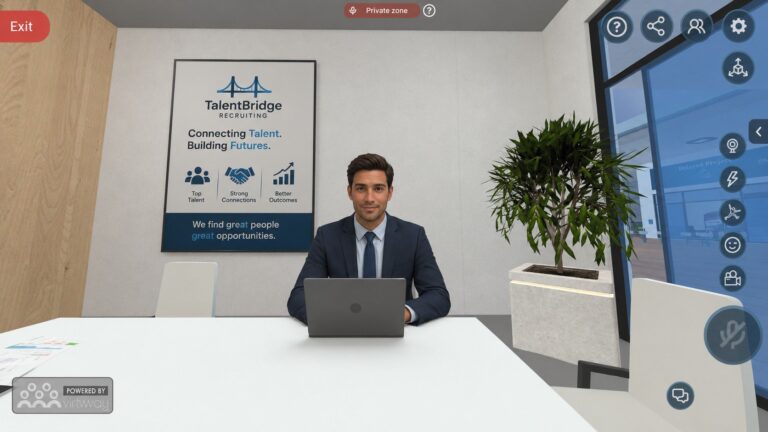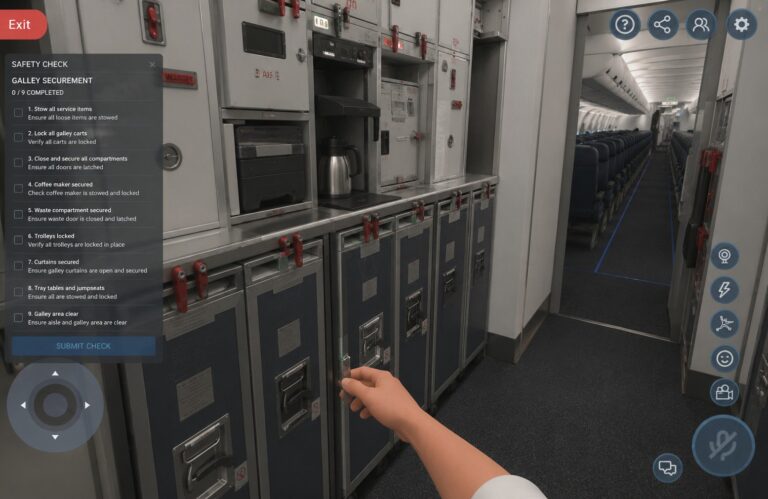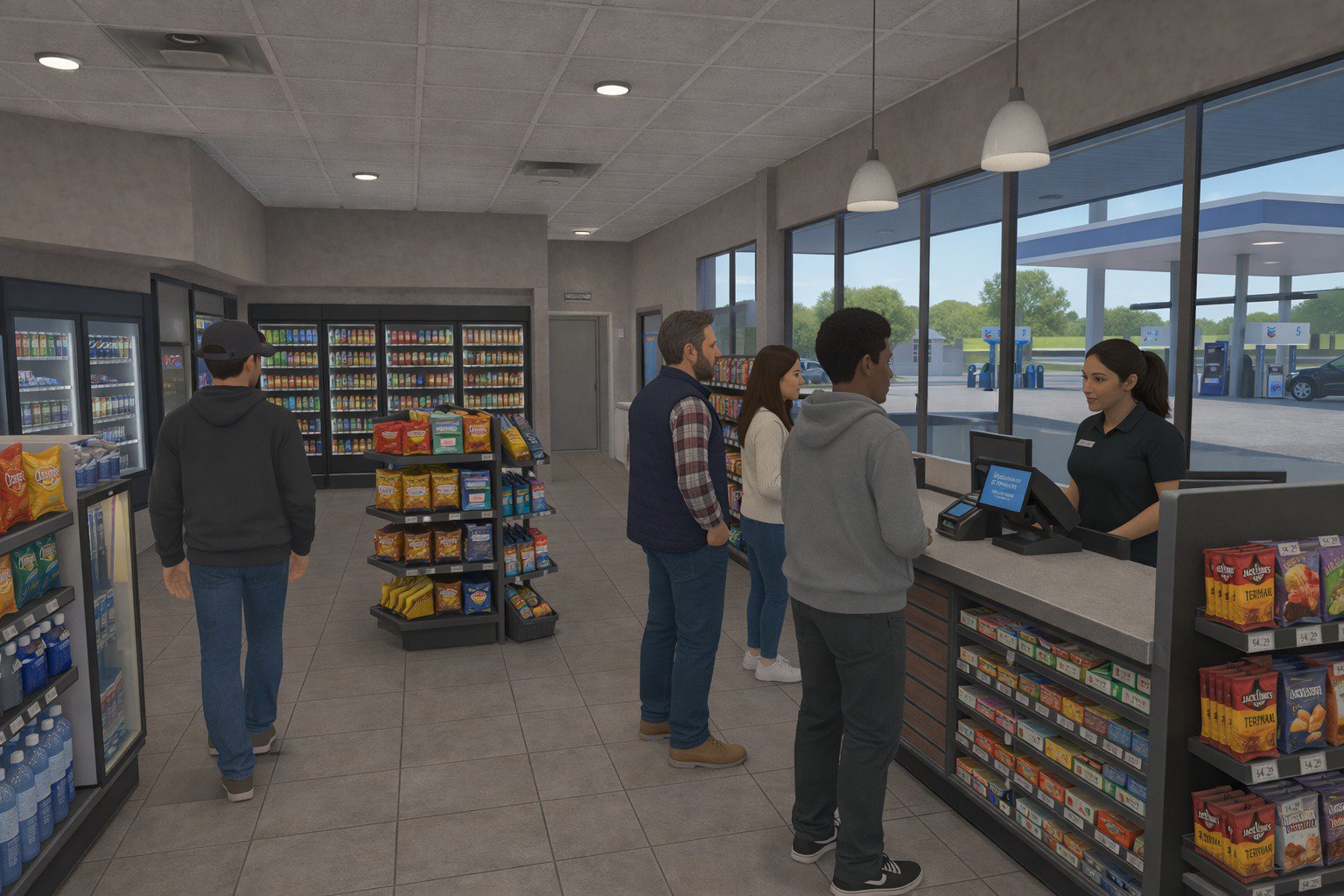
Convenience stores and gas stations are not “small retail.” They are high-tempo operations with real risk.
Teams often run lean, handle constant micro-transactions, and manage the hardest mix of customer moments: urgency, frustration, and late-night edge cases.
That is why training for this vertical cannot stop at knowledge modules.
An LMS can teach policies, promotions, and POS steps. But the highest-value training is what prepares people for the unpredictable moments that actually happen on shift.
That is where immersive, voice-based AI roleplay changes the game. It simulates real situations, with realistic pressure, so employees build habits they can use immediately.
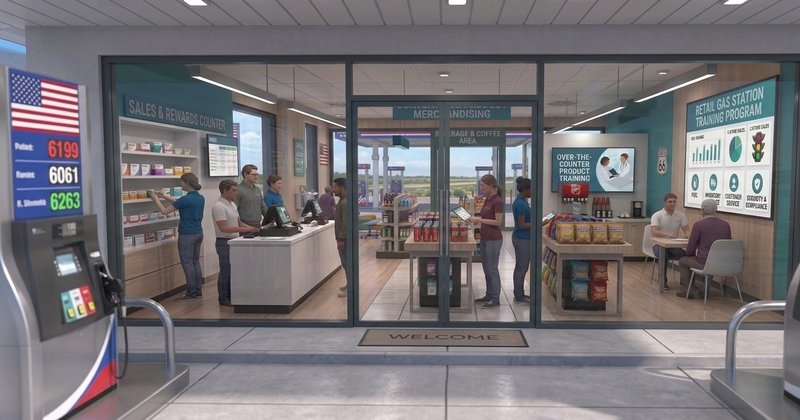
To explore Virtway’s immersive approach, start here:
Why convenience and fuel retail is uniquely hard to train
If you operate convenience locations, you already know the truth: the job is simple until it is not.
A shift can move from normal to chaotic in minutes. A pump issue creates a line inside. A promotion fails. A customer is in a hurry. Another customer is angry. A delivery arrives at the wrong time. A new hire is alone at the counter.
And in some locations, there is a more serious risk.
Robbery-related violence and workplace violence are real concerns in convenience and gasoline stations. NIOSH has published specific strategies for reducing robbery-related violence in gas stations and convenience stores. You can review the guidance here: Reducing workplace violence in gasoline stations and convenience stores (NIOSH).
OSHA also provides workplace violence resources and prevention program guidance that many retail employers use as a baseline reference: Workplace violence overview (OSHA).
The hidden training gap: “knowing policies” vs “performing under pressure”
Most convenience and fuel retailers already train these topics:
- POS basics and cash handling
- promotions and loyalty
- age-restricted sales
- returns and refunds
- basic safety reminders
Those are necessary.
But the real performance gap appears when employees must make fast decisions while staying calm and compliant.
This is why traditional training often feels complete on paper, yet performance still varies by store, shift, and tenure.
The missing layer is realistic practice.
The moments that matter most (what to train with realistic roleplay)
In this vertical, the best roleplay scenarios mirror real shift friction.
Fast service with accuracy
Customers want speed, but mistakes cost money.
Roleplay helps employees build a rhythm for:
- scanning and payment flow
- change handling and receipts
- quick, clear customer communication
Promotions and loyalty without slowing the line
A loyalty issue can turn a normal checkout into a conflict.
Practice should include the real constraint: the line keeps moving.
Age-restricted sales with confidence
Age checks can create tension. The employee needs a consistent script and a calm tone.
Customer conflict and de-escalation
Convenience stores see a steady stream of small conflicts.
De-escalation is a skill. It is not a policy.
Fuel, pump, and payment exceptions
Many of the most stressful moments involve exceptions:
- pump authorization confusion
- prepay misunderstandings
- “I got charged twice” claims
- receipt disputes
Robbery risk: train for safety, not heroics
No article can replace your company’s security policy or local law enforcement guidance.
But there are clear principles that many safety programs reinforce.
First, the goal is always to protect life. Money and products are replaceable. People are not.
Second, employees should not be put in a position where they improvise during a robbery. Improvisation increases risk.
This is why robbery readiness training matters.
The best programs prepare employees to stay calm, comply with policy, and know what to do immediately after an incident.
NIOSH’s guidance focuses on prevention strategies and worker protection in this setting. OSHA’s workplace violence resources also provide program elements and training considerations.
What immersive roleplay can improve in robbery readiness
Immersive roleplay is valuable here because it can simulate the emotional reality without putting anyone in danger.
It can help employees practice:
- recognizing early warning signs and suspicious behavior (without profiling)
- using calm, simple language
- following a “safety first” script
- triggering the right escalation steps when safe to do so
- post-incident steps such as reporting, documentation, and support
It can also help managers practice what to say to employees after an event. Psychological safety matters.
Important: Robbery response policies vary. Always align training to your internal security policy and local requirements.
Why immersive AI roleplay works better than an LMS alone
The core value is realism.
Immersive roleplay can simulate the store environment:
- background noise
- queue pressure
- interruptions
- a customer’s mood changing mid-conversation
- unexpected exceptions that force decisions
This creates practice that feels like the job.
It is also more engaging for learners. It feels relevant, not abstract.
Virtway supports immersive environments with voice-based AI roleplay and performance analytics, so organizations can practice scenarios repeatedly, score readiness consistently, and benchmark by store and region. Learn more:
A simple readiness score you can benchmark by store and shift
Start with a score that leaders can understand.
A 0–24 model works well.
Score each skill from 0 to 4:
| Readiness skill | What “good” looks like |
|---|---|
| Speed with accuracy | fast flow with low error rate |
| Policy confidence | clear, consistent, no arguing |
| De-escalation | lowers tension and stays respectful |
| Exception handling | resolves pump/payment/promo issues calmly |
| Safety judgment | escalates early when something feels unsafe |
| Close and next step | customer knows what happens next |
The scenario library (a practical starter set)
Start small and build from real incident data.
A strong starter set is 10 scenarios:
- two fast-checkout scenarios
- two promotions/loyalty scenarios
- two fuel exception scenarios
- two conflict/de-escalation scenarios
- two safety/robbery readiness scenarios
The goal is not to create a “movie.”
The goal is to rehearse decisions and language.
A two-week improvement loop that proves results
If you need leadership buy-in, show improvement fast.
Week one: benchmark three scenarios per employee.
Then identify the top two gaps per store.
Week two: assign targeted practice scenarios.
Then re-benchmark with the same scenarios.
This produces a clear before-and-after story.
Where Virtway fits
Virtway supports immersive training for large and distributed teams.
You can explore:
FAQs
Does immersive training require VR headsets?
Not necessarily. Virtway supports access without VR headsets through web and mobile.
Can we use this to reduce robbery risk?
Training is one layer. Robbery risk reduction also depends on environmental design, policies, staffing, and security measures. NIOSH’s guidance offers practical prevention strategies for gas stations and convenience stores.
What should we train first?
Start with the highest frequency, highest friction moments: promotions disputes, fuel exceptions, and customer conflict. Then add safety scenarios.